
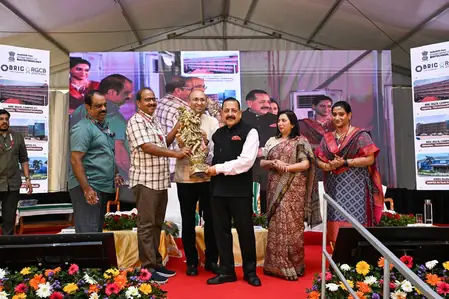
Union Minister of State Jitendra Singh lit the fuse for India’s biotech revolution in Thiruvananthapuram, laying the groundwork—literally—for advanced manufacturing at BRIC-RGCB’s Akkulum campus. The cGMP facility foundation stone ceremony underscored the BioE3 policy’s ambition to anchor biotechnology in the nation’s development trajectory.
Speaking passionately, Singh described BioE3 as a visionary strategy linking biotech innovations to economy, environment, and employment. India’s unique policy framework stands out globally, fostering sustainable growth through green transitions and circular models. He spotlighted the Biopharma Shakti Mission as evidence of policymakers’ foresight into the bio-driven global shift.
Nuclear medicine research is surging post-liberalization, Singh noted, urging R&D institutions to team up with private industry. The Nuclear Medical Mission creates fresh avenues for interdisciplinary work and translational breakthroughs, potentially transforming diagnostics and treatments.
Singh also commissioned the National Facility for Recombinant Cells and Sensors and kicked off Science Day festivities. He praised RGCB’s excellence in genomics, disease biology, and cancer research, which has magnetized scholars for its bioinformatics and sequencing strengths—achievements fueled by a decade of prioritized science investments.
DBT Secretary Dr. Rajesh Gokhale hailed biotechnology as pivotal for progress, detailing BioE3 2024’s six sectors like bio-manufacturing. The HPV vaccine drive exemplifies data utilization from the institute.
Director Dr. T.R. Santhosh Kumar detailed the facility’s arsenal of 600-700 cell lines assaulting cancer pathways, making it an international asset. The incoming cGMP plant will slash costs for cell/gene therapies, paving the way for widespread next-gen healthcare access and positioning India at the biotech vanguard.