
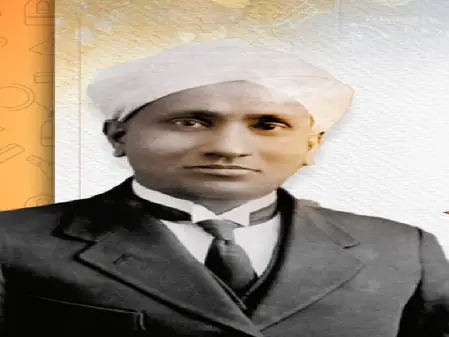
Every year on February 28, India observes National Science Day, paying tribute to C.V. Raman’s 1928 Raman Effect discovery—the first Nobel-winning science feat by an Indian. This elegant principle transformed light physics forever.
Light traversing any medium scatters via molecular collisions. Raman noticed frequency shifts, distinct from elastic Rayleigh scattering. These inelastic scatters encode molecular ‘fingerprints’—unique vibrational signatures.
Visualize laser light piercing a liquid: scattered beams reveal spectral lines shifted by mere nanometers, yet packed with data on bonds, symmetry, and composition.
Post-discovery applications exploded. It decoded crystal structures pre-X-ray diffraction, advanced drug development, and even helped map Mars rovers’ soil. Environmental monitoring now uses portable Raman devices for pollutant detection.
2026’s events under ‘Women in Science: Catalysts for Developed India’ theme fill auditoriums nationwide. From school fairs in Delhi to seminars in Kolkata, focus stays on empowering women in research.
Raman, knighted yet rooted in Indian ethos, proved world-class science needs no foreign labs. His effect’s ubiquity—from smartphones to space probes—affirms: one insight can illuminate infinities.