
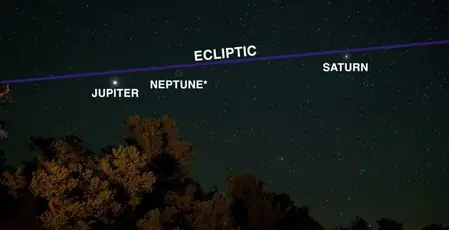
Ever seen multiple planets strung out like pearls on a cosmic string overhead? That’s the Planet Parade—a breathtaking sky event where worlds align in apparent straight-line formation, thrilling amateur astronomers everywhere.
No formal term in astronomy textbooks, the parade stems from geometry: planets circle the Sun in the ecliptic plane, projecting as a line from Terra firma. Conjunctions merge their glows; oppositions amplify visibility opposite Sol, crafting the illusion of perfect order.
Naked-eye favorites include Mercury (swift inner orb), dazzling Venus, fiery Mars, mighty Jupiter, and ringed Saturn—each wandering distinctively across the dome. Ancients dubbed them planetai, Greek for wanderers, for their motion. Outer worlds Uranus and Neptune fade into obscurity sans scopes.
Such spectacles, per NASA, unfold over days to weeks, planets inching along their paths. Optimal hunts unfold at dusk’s end or dawn’s brink, targets lofted high to dodge air’s hazy filter. Light pollution, structures, or clouds spell doom—seek dark skies.
The magic peaks when sun-huggers Mercury and Venus sync with distant heavyweights. Venus rules twilight realms for moons; Mercury teases with short cameos. Together, they forge parades lasting from fleeting nights to prolonged displays.
In a busy world, these events pull us skyward, echoing humanity’s timeless gaze upward. They showcase solar harmony, urging us to track calendars for the next grand gathering and rediscover awe in the everyday extraordinary.