
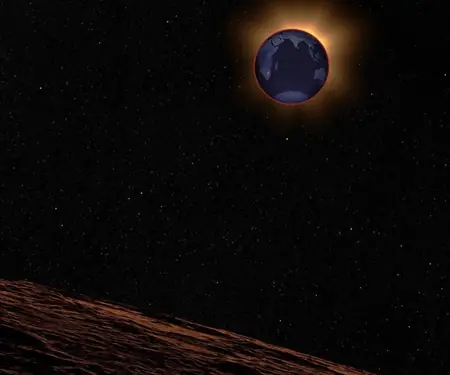
A blood-red Moon awaits on March 3, 2026—the first total lunar eclipse of the year, captivating millions worldwide. This phenomenon unfolds as the Sun, Earth, and Moon align, with our planet’s shadow eclipsing the Moon entirely.
Full moons set the stage for lunar eclipses, though orbital inclinations limit them to occasional occurrences amid 4-7 yearly events. Visible across hemispheres without tools, they offer pure wonder.
The Blood Moon moniker stems from refraction: sunlight passes through Earth’s atmosphere, shedding blue tones and arriving red-dominated at the Moon. Volcanic ash or pollution can amplify this effect.
August 28 brings the second eclipse of 2026, partial in nature.
Explore the spectrum:
– Total: Complete umbral coverage, prolonged red phase.
– Partial: Incremental shadowing, partial coverage.
– Penumbral: Subtle penumbral passage, barely perceptible pallor.
Imagine countless global sunsets converging on the Moon—that’s the Blood Moon’s magic. These alignments highlight celestial mechanics in action. For optimal viewing, seek dark skies away from city lights. Astronomy apps can pinpoint timings. This eclipse isn’t just a sight; it’s a bridge to the universe’s rhythms.