
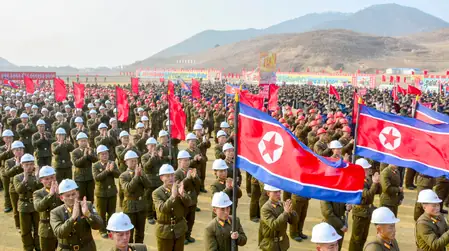
Global leaders held their breath on February 10, 2005, when North Korea’s state agency announced the obvious unspoken truth: the country had nuclear arms. The Democratic People’s Republic of Korea’s candid revelation sent shockwaves through diplomatic circles, fundamentally altering the landscape of world security.
This came at a critical juncture in the six-party framework—uniting the U.S., China, Japan, South Korea, Russia, and the DPRK—to eliminate nuclear threats from the peninsula. Pyongyang’s move declared the talks obsolete, asserting nuclear status as fact and mocking NPT commitments.
America decried it as an assault on stability, predicting domino effects where other states might follow suit. Japan and South Korea, long wary of North Korean missiles, intensified vigilance and alliances.
Beijing, DPRK’s key partner, advocated de-escalation to protect trade routes and influence. Moscow reinforced non-proliferation pleas but warned of conflict perils.
Domestically, the admission under Kim Jong-il served as propaganda gold, portraying nukes as the ultimate safeguard against imperialism and strengthening internal cohesion.
The declaration’s legacy endures. It heralded a series of tests, missile leaps, and persistent tensions, compelling ongoing sanctions, talks, and military buildups. North Korea’s 2005 gambit proved that bold nuclear claims can shift power from negotiation tables to missile silos.