
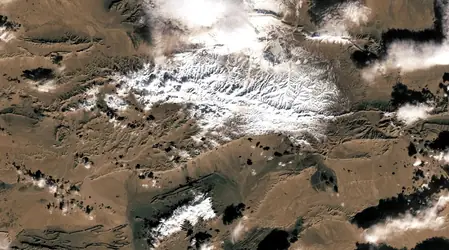
Forty-seven years ago, the Sahara Desert scripted a chapter of wonder. In Ain Sefra, Algeria, February 18, 1979, brought snow to sands that rarely see moisture. This groundbreaking event transformed the landscape, offering a white canvas amid eternal gold.
The Sahara stretches across North Africa, notorious for temperatures exceeding 40°C by day. Snow requires freezing conditions, which arrived via a rare influx of cold, humid air from the Mediterranean. As it encountered the region’s uplands, the air cooled rapidly, birthing snowflakes.
Weather scientists attribute this to orographic lift—moist winds rising over mountains, condensing into precipitation that froze mid-fall. The brief cover melted fast, but not before photographers immortalized the anomaly. Ain Sefra’s proximity to the Atlas Mountains played a pivotal role in this setup.
This wasn’t isolated; echoes came in later years with snow in 2016, 2018, and 2021. Though pre-dating intense climate debates, it highlights atmospheric unpredictability. Not tied to global warming, it nonetheless reveals how interconnected weather patterns can produce the extraordinary.
The 1979 snowfall stands as nature’s masterclass in resilience and surprise. It urges us to respect the planet’s fluid systems, where deserts can dream of winter, and routine gives way to the remarkable.