
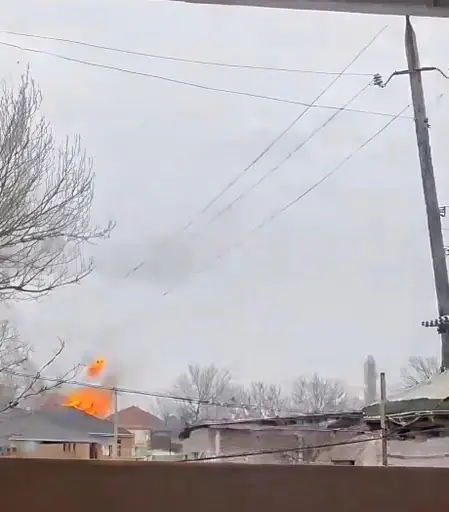
Azerbaijan is on high alert after Iranian drones struck near vital facilities in its Nakhchivan exclave, injuring two locals and prompting the immediate summons of Tehran’s envoy. The Foreign Ministry’s forceful response lays bare rising frictions in the South Caucasus.
The attacks unfolded dramatically: one unmanned aerial vehicle hit the airport terminal in Nakhchivan Autonomous Republic, the other fell close to a school in Shakarabad village. Azerbaijan’s statement pulled no punches, lambasting the ‘drone strikes from the Islamic Republic of Iran’ for inflicting harm on civilians and public assets.
Labeling the moves a flagrant international law infraction, Baku pressed Iran for explanations, preventive actions, and reserved countermeasures. This comes as Iran’s US-Israel feud spills over, targeting a Caucasus player for the first time.
Neutral in Mideast strife, Azerbaijan has pivoted toward Israel and the US, easing away from Moscow. Lacking American bases, it faces Iran’s reach nonetheless.
Military ties with Israel exacerbate Tehran tensions, despite neighborly pragmatism and shared Shia faith. With millions of ethnic Azeris in Iran – up to 20 million near the border – cultural bonds coexist with strategic strains.
The episode spotlights vulnerabilities in post-Nagorno-Karabakh Azerbaijan, where energy routes and alliances are paramount. As envoys huddle, the world watches for signs of de-escalation or deeper crisis.