
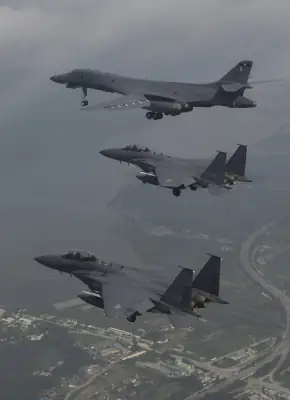
From the runways of the US mainland to the heart of Iran—three B-1 bombers executed a breathtaking non-stop bombing run amid soaring US-Iran hostilities. Late February 2026 saw Operation Epic Fury erupt, with American and Israeli forces delivering devastating air, missile, and naval blows to Tehran’s military machine.
Experts from the Military Air Tracking Alliance, drawing on open-source data from 30 analysts, uncovered the flights’ audacious paths. These B-1B Lancers, returning to base without pause, zeroed in on Iran’s ballistic missile bunkers and command nodes during nighttime ops.
Confirmation came swiftly: a US official told Axios the bombers targeted surface-level missile installations and control centers. Renowned for radar evasion and a staggering 75,000-pound bomb capacity, B-1s are tailor-made for such deep-strike missions against fortified targets.
US Central Command’s tally from the initial 24 hours? Over 1,000 strikes dismantling missile sites, bases, and leadership hubs. Iran’s riposte—drones and missiles—exacted a toll, with four wounded US servicemen now lost.
The operation’s success highlights technological edge, but Iran’s defiance fuels escalation fears. Oil markets convulse, supply chains strain, and diplomats scramble. As B-1 shadows crossed borders unchallenged, the world ponders: will restraint prevail over retaliation?