
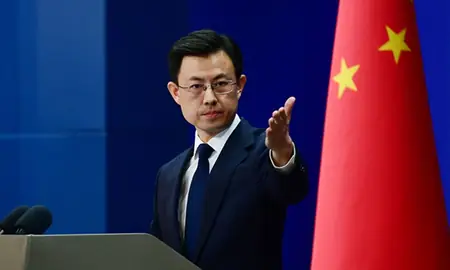
China’s decisive rejection of attacks on Iran’s new Supreme Leader Mojtaba Khamenei has ignited global discourse on sovereignty and interventionism. With Ayatollah Ali Khamenei’s successor now official, Beijing’s Foreign Ministry spokesperson Guo Jiakun declared during a briefing that the appointment adheres strictly to Iranian constitutional norms and brooks no foreign critique.
Israel’s military escalated hostilities via a Farsi X post, cautioning that it would target all involved in naming Khamenei’s heir, post his alleged neutralization. ‘We will not hesitate to make you a target,’ the IDF asserted, framing the regime as terrorist and vowing to dismantle any regeneration attempts. Israel’s position echoes promises of retribution mirroring Khamenei’s fate.
America’s involvement peaked with Trump’s dismissal of Mojtaba as inadequate and calls for U.S. oversight in selections—claims Iran flatly dismissed. China’s unified voice, echoed by Minister Wang Yi, prioritizes Iran’s autonomy: no external forces should dictate its governance.
‘Respect for sovereignty, security, and integrity is non-negotiable,’ Guo stressed, opposing pretexts for intrusion. This comes after March 4 revelations, amplifying geopolitical strains.
Iran’s leadership continuity amid adversity highlights its internal resilience, bolstered by allies like China. This rift exposes broader U.S.-Israel strategies to reshape Middle Eastern power structures, contrasting with Beijing’s multipolar vision. Implications extend to trade routes, energy security, and alliances, as stakeholders brace for repercussions in an increasingly volatile arena.