
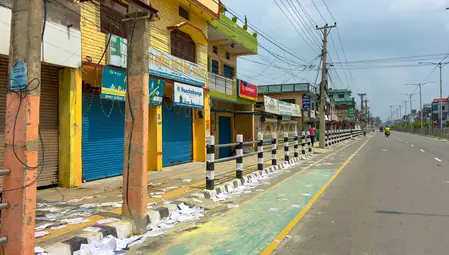
Pre-election jitters have gripped Nepal’s southern plains, culminating in an indefinite curfew across Birgunj after Sunday’s youth group brawl. With March 5 elections looming, Parsa district officials activated emergency measures Monday at 9:45 AM, enveloping the metropolitan area in restrictions.
Chief District Officer Bhola Dahal mapped the curfew zone precisely: eastern bypass to western Sirsiya River, northern Gandak Chowk to southern Shankaracharya Gate. Bans target crowds, marches, sit-ins, and meetings to avert mass unrest.
Strategic carve-outs allow media, university examinations, medical emergencies, tourism, human rights monitors, diplomatic travel, and validated flyers to proceed. Security personnel stand ready to facilitate air travel logistics.
Just days prior, Rautahat’s Gaur municipality mirrored the turmoil. Saturday’s wedding procession spat in Ward 6 Subgadh devolved into pelting stones and torching a vehicle. A Friday six-point pact failed to hold, sparking renewed clashes by 9 AM and a persisting curfew from 1 PM.
As Nepal navigates this powder keg, the Terai’s volatility tests institutional resilience. Political rhetoric stresses unity, while reinforcements bolster hotspots. Voters watch warily, hoping for orderly polls amid simmering divisions that threaten the democratic exercise.