
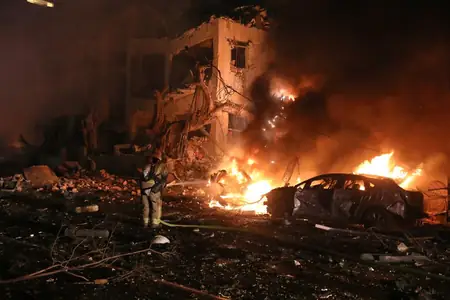
Saturday night’s skies over Haifa turned hostile as Iran’s IRGC executed a missile barrage on a strategic refinery, evening the score for brutal assaults on its own energy backbone by US and Israeli forces. Sepah News broadcast the IRGC’s claim of successful hits using Kheibar Shekan weaponry.
Back in Iran, the toll from enemy fire was stark: multiple Tehran-area oil storage sites erupted in flames, with emergency responders locked in a desperate containment battle. The capital endured a harrowing bombardment, its streets echoing with the roar of detonations.
February 28’s US-Israel blitz had already drawn blood, felling key figures close to Supreme Leader Khamenei and senior officers amid strikes on urban centers. Tehran responded with a flurry of projectiles and UAVs targeting adversary installations throughout the Middle East.
Ali Larijani, secretary of Iran’s top security body, lambasted the incursions as fragmentation tactics, pressing Trump for contrition over his Israeli alliance. ‘The pain inflicted on our nation is unforgettable,’ he asserted in a fiery address.
Diplomatic notes struck a conciliatory chord elsewhere, as FM Araghchi updated on persistent talks with Saudi FM Faisal bin Farhan. The Kingdom committed to withholding its lands, skies, and seas from any anti-Iran agenda.
This back-and-forth underscores the high-stakes energy war defining current hostilities. With refineries in the crosshairs, observers brace for economic aftershocks, from oil volatility to strained alliances, as peace hangs by a thread.