
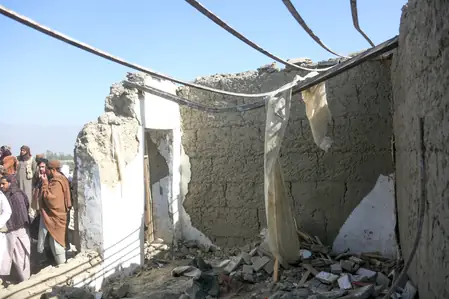
The shadows of war lengthen over Afghanistan as Pakistani airstrikes claim innocent lives, drawing sharp rebuke from Amnesty International. Demanding a transparent probe, the rights body spotlighted the February 21-22 assaults in Nangarhar and Paktika, where civilians bore the brunt of cross-border fury.
UNAMA’s detailed briefing reveals the horror: 13 fatalities, predominantly women and children, in Nangarhar’s border districts, with seven survivors battling injuries from late-night bombings. Paktika saw additional carnage—a school and mosque reduced to rubble in Bermal, a family home erased in Orgun by midday strikes.
‘We are deeply troubled by civilian casualties from these airstrikes,’ Amnesty declared, insisting on rigorous, unbiased scrutiny. It implored combatants to honor global legal obligations, protecting non-fighters amid the fray—a call echoed from past atrocities.
Flashback to late 2025: UNAMA pinned 70 deaths and 478 wounds on Pakistani forces during heated frontier exchanges with Taliban units. Now, Afghanistan’s Defense Ministry decries the incursions as overt attacks on sovereignty, flouting international law and neighborly ties.
Vowing proportionate reprisal, Kabul slammed the targeting of madrasas and homes as proof of Islamabad’s intel lapses. UNAMA condemned the violence outright, urging restraint and human rights compliance to avert more suffering.
With tensions boiling, this episode underscores the fragile peace along the Afghan-Pak border. Amnesty’s intervention signals a pivotal moment—can accountability prevail over aggression?