
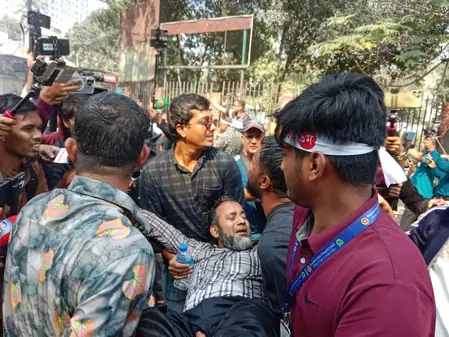
Friday’s streets of Dhaka turned into a battleground for economic justice as government workers protested en masse outside Jamuna House, the abode of Chief Adviser Muhammad Yunus, insisting on the 9th Pay Scale’s prompt enforcement. Originating from Shahbagh at 10:30 AM, the rally faced stiff resistance from authorities.
Reports from local outlets detail how security forces barricaded the area, deploying non-lethal measures like water cannons and sound devices when protesters surged ahead. Amid the turmoil, voices rose in unison, decrying wages that fail to match Bangladesh’s cost-of-living surge.
Human stories emerged from the fray. One female demonstrator stressed their peaceful intent focused solely on pay scales. A captured worker opened up about his burdens: as the family’s lone provider, survival on current salaries proves impossible.
Echoes of December’s Secretariat showdown reverberate. Employees, under Badiul Kabir’s guidance, had trapped Finance Adviser Salehuddin Ahmed, pressing for benefit notifications. Kabir declared they wouldn’t relent without a gazette stamp.
Preemptive warnings dated back to December 3, when Nizamuddin Ahmed’s letter to the adviser threatened a January 10 intensification. In Yunus’s interim regime, these persistent demands reveal fault lines in public administration, urging swift policy responses to avert wider disruptions and restore worker confidence.