
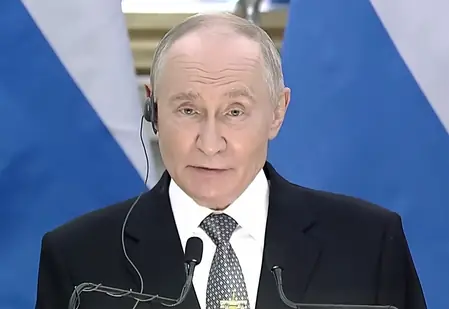
Gulf Arab states, shaken by attacks on their vital oil refineries amid the US-Israel war on Iran, have turned to Russia for help. President Vladimir Putin assured leaders from four nations that he would convey their anxieties directly to Tehran, tapping into Russia’s strong bilateral relations.
Speaking to journalists, Kremlin aide Dmitry Peskov outlined Putin’s proactive stance. Following Monday’s calls, Putin committed to aiding de-escalation efforts. ‘He will spare no effort to help reduce tensions,’ Peskov noted, adding that the Gulf leaders’ pointed concerns over infrastructure hits would guide talks with Iran.
This diplomatic push follows the explosive February 28 joint operation by America and Israel, which targeted Iran’s heartlands, killing Supreme Leader Ayatollah Ali Khamenei and other key personnel. The White House framed it as preemptive action against Tehran’s missile and atomic threats, with Trump publicly inciting an Iranian uprising.
Iran hit back hard, with its Revolutionary Guards striking Israeli territories and US installations in Bahrain, Jordan, Qatar, Kuwait, UAE, and Saudi Arabia. The refinery assaults have amplified Gulf vulnerabilities, prompting urgent calls for calm amid fears of economic fallout from disrupted petroleum exports.
Putin-Trump dialogue remains off the table, leaving Russia to navigate solo. As stakeholders await outcomes from potential Moscow-Tehran exchanges, the world braces for shifts in Middle East power dynamics that could redefine alliances and energy stability for years.