
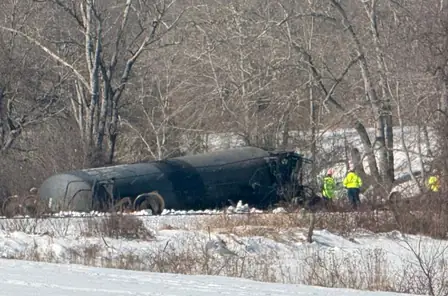
Mansfield, CT saw a tense morning Thursday when a New England Central Railroad freight train derailed near Eagleville Lake, dumping hazardous cargo into the water. The 41-car consist, powered by two locomotives, lost several cars along the Willimantic River banks at approximately 9 a.m.
Among the derailed were six cars of liquid propane—four of which plunged into the lake—plus others with liquefied natural gas and food-grade grease. Mansfield Fire Chief John Roche assured the public of no injuries but activated shelter-in-place for nearby homes, citing the gas’s undetectable scent.
Half a mile around the site locked down under advisory, roads shuttered, and detours posted. By early afternoon, officials reported no leaks or environmental damage, crediting proactive measures like water-deployed absorbent booms from DEEP teams.
The site’s inaccessibility demands heavy equipment, delaying recovery. Roche anticipates days of work as specialists navigate the terrain. State environmental watchdogs stand ready, emphasizing prevention amid rising rail mishaps.
This derailment spotlights vulnerabilities in hazmat transport. With trains crisscrossing residential zones, experts urge infrastructure upgrades and real-time monitoring tech. As probes launch, Mansfield exemplifies the razor-thin margin between routine freight runs and potential catastrophes.