
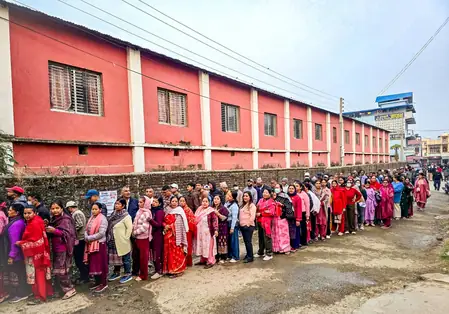
Nepal’s latest parliamentary showdown ended on Thursday amid calm skies, but the real story is the dismal voter turnout estimated at 60 percent—potentially the weakest since 1991. This comes hot on the heels of the Gen Z revolution, where enthusiasm was sky-high for change.
Chief Election Commissioner Ram Prasad Bhandari, in his update, cautioned that figures are provisional as data rolls in from across the country. Some polling stations buzzed late into the evening for entrants before cutoff. Apart from minor hiccups, monitors confirmed a peaceful affair.
Counting begins at once, with helicopters ferrying boxes from far-flung 15 districts. With 18.9 million on the rolls, boycotts at select sites stemmed from government ire, not electoral bodies, Bhandari stressed.
The backdrop? Last year’s Gen Z protests ousted PM KP Sharma Oli’s regime. Newly installed, he heeded calls to disband parliament, triggering these polls two years ahead. Over 67 percent of voters are Gen Z newcomers, eyeing bigger roles by 2026.
Fields boast 3,406 in direct contests and 3,135 proportional hopefuls. This turnout slump, lower than 2022’s 61.41 percent, sparks debate on civic disengagement in Nepal’s evolving democracy. Results could redefine power dynamics in the land of Everest.