
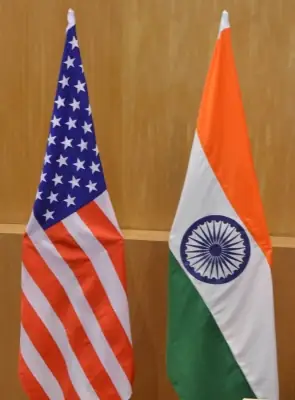
The India-US trade agreement has sparked widespread approval from business heavyweights, who see it revitalizing partnerships, though analysts remain wary of ambiguities in implementation.
Venture capital player Asha Jadeja Motwani, a GOP fundraiser, shared that Trump insiders had primed for this since early February. ‘The pace surprised us,’ she admitted in a candid chat. Betting on Modi’s readiness to swap Russian crude for US or partner oil, she hailed tariff relief from 25% to 18% as exemplary.
‘India is now indispensable to DC in energy, defense, tech,’ Motwani asserted, pushing businesses to forge ahead unhindered.
Raymond Vickery, once a top trade developer at Commerce, saw silver linings in pausing bilateral frictions over duties and visas. He approved the cut but demanded clarity on affected goods, flagging risks to farm products, dairy, pulses.
Skeptical of $500 billion purchase pledges—dwarfing $200 billion trade—Vickery called it ‘overambitious.’
From CSIS, Rick Rossow praised trade’s grit: up 16% despite tariffs, thanks to drug sector breaks. A year-end slump risked US lag as India pivoted elsewhere, but this ‘initial step’ restores balanced tariffs, aiding access.
Neeraj Antani, Ohio GOP figure, rejoiced in reciprocal easings and anti-Russia oil moves: ‘A landmark for allied democracies, shattering old stalemates.’
Entrepreneur Yogi Chugh framed it as a diaspora triumph, fortifying positions in cutthroat markets.
Talks faltered repeatedly on access and discord, but volumes hit $200 billion. Amid energy, minerals, defense tech pursuits, the deal signals convergence—details forthcoming will test its mettle.