
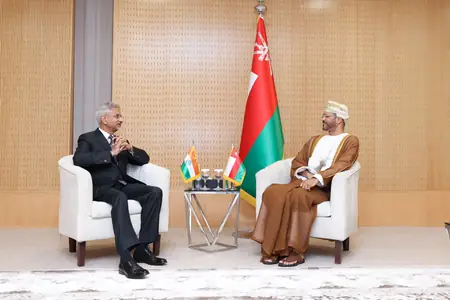
Diplomatic lines buzzed with urgency on Thursday as India’s S. Jaishankar connected with Oman’s Foreign Minister Sayyid Badr bin Hamad Albusaidi over the phone. Their agenda: the spiraling conflict in West Asia, where recent escalations threaten to disrupt international commerce and heighten humanitarian risks.
Jaishankar promptly updated followers on X about the ‘conversation with Oman’s FM on West Asia situation,’ highlighting India’s commitment to multilateral solutions. Echoing this, PM Modi’s recent parley with Sultan Haitham on March 3 decried sovereignty breaches in Oman and lauded support for Indians there, while stressing diplomatic pushes for peace.
The tanker tragedy amplifies the stakes. On March 2, an unmanned vessel attacked a Marshall Islands tanker 52 nautical miles offshore, carrying 59,463 tons of cargo. An engine room inferno killed one Indian crewman; rescuers airlifted 21 survivors—16 Indians, 4 Bangladeshis, 1 Ukrainian—with Oman’s navy securing the area.
This violence stems from US-Israel’s February 28 operation against Iran, targeting military assets and felling high-ranking officials linked to Ayatollah Khamenei. Iran’s riposte—drone swarms and missile barrages on US assets—has ratcheted up fears of wider war.
India’s interventions are strategically calibrated. The Gulf hosts 8 million Indians sending billions in remittances and supplying much of India’s oil. By fostering ties with Oman, a Gulf pivot known for quiet diplomacy, New Delhi aims to safeguard its interests and advocate de-escalation. Analysts watch closely as these talks could catalyze international forums addressing the crisis, urging all sides toward restraint and dialogue.