
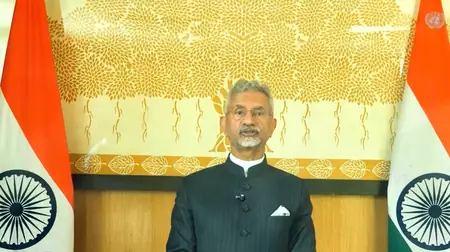
Addressing the UN Human Rights Council virtually from Geneva, External Affairs Minister S. Jaishankar championed a refreshed, inclusive human rights paradigm. On Wednesday, he appealed for a perspective encompassing development and capacity-building to deliver concrete benefits to the vulnerable, sidelining politicized debates and double standards.
India prioritizes conversation over clash, unity over splits, and human progress over petty agendas, Jaishankar said in a world of strife and doubt. Central to his message: terrorism demands zero tolerance as the ultimate human rights outrage against civilians.
Freshly elected to the Council with a landslide 177 votes, India arrives with Global South backing, vowing dialogue-driven advancement over selective scrutiny. ‘This mandate shows trust in our approach,’ he declared.
India’s vision stems from its resilient democracy—navigating poverty, shocks, and pluralism. Jaishankar implied criticism of Western lapses in addressing broader insecurities, asserting that no one’s rights are safe if regions falter or groups are sidelined.
He hailed technology as a human rights enhancer, spotlighting India’s DPI for its massive impact: transparent welfare delivery, financial inclusion, and public services for crores, with global knowledge-sharing.
With inequalities deepened by COVID, climate disasters, and geopolitical frictions, Jaishankar called for holistic strategies. His speech positions India as a bridge-builder, emphasizing terrorism’s defeat and developmental rights to forge a fairer world.