
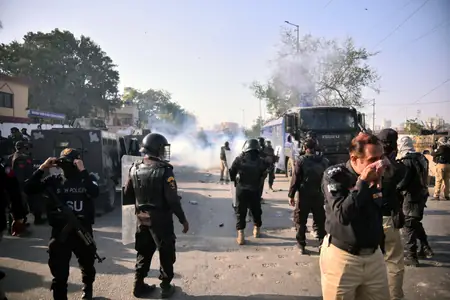
Pakistan’s vibrant metropolis of Karachi entered its third day of complete shutdown Wednesday, as security forces tightened grips following fatal protests over the assassination of Iran’s top cleric, Ayatollah Ali Khamenei. The violence, which killed 11 near the US Consulate, has forced a citywide clampdown unseen in recent memory.
Protests ignited on Mai Kolachi Road outside the American outpost, morphing into deadly confrontations that left scores wounded. Rangers and police responded with iron-fisted measures: shipping containers fortify PIDC Bridge, blocking Jinnah Bridge traffic entirely.
Access remains restricted; ID checks are mandatory for Boat Basin-Mai Kolachi travel. Barricades line MT Khan and PIDC Roads, manned by vigilant personnel. Bilawal House locals detour via Clifton Bridge to Metropole and II Chundrigar.
Traffic wardens blanket key zones, offering helpline support for stranded citizens. This multi-layered security web aims to contain spillover from the Khamenei fallout.
Diplomatically, the US has pulled back: embassies in Islamabad and consulates in Lahore-Karachi paused operations through March 6, voiding visa slots as per their X alert on current threats.
With businesses shuttered and streets deserted, the lockdown tests Karachi’s resilience. Experts predict gradual easing but caution against underestimating anti-Western fervor stoked by the Iranian leader’s demise. Restoration of order hinges on de-escalation and community outreach.