
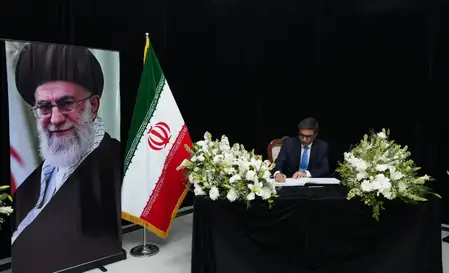
The killing of Iran’s Supreme Leader Ayatollah Ali Khamenei in a precision strike by Israel and the US has prompted a swift diplomatic response from India. Foreign Secretary Vikram Misri led the way, visiting the Tehran embassy in New Delhi to inscribe condolences in the official book.
Accompanied by protocol, Misri held talks with Ambassador Mohammad Fathali, reaffirming India’s solidarity in this hour of grief. The embassy’s initiative allows visitors on March 5, 6, and 9 to record their sympathies, drawing from India’s diverse populace.
Since assuming power in 1989, the 86-year-old Khamenei shaped Iran’s destiny. His end came abruptly on February 28, alongside elite military figures and family. The toll included his spouse, who died from wounds, and close relatives.
Retaliation was swift: Iran targeted US installations and Gulf allies. Border flare-ups extended to Azerbaijan, where drones hit key infrastructure, wounding civilians and escalating summons of envoys.
With state-declared mourning stretching 40 days, the world grapples with ripple effects. Cairo’s Iranian mission witnessed outpourings of emotion. India’s measured steps, including prior calls for calm, aim to mitigate a potential powder keg in West Asia.