

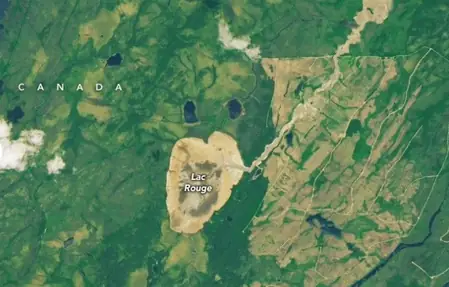
Imagine waking up to find your local lake replaced by a dusty basin—that’s the surreal reality for Quebec’s Lake Rouge community in May 2025. NASA’s cutting-edge satellite data, published July 13, has finally pieced together the puzzle of this vanishing act, revealing a dramatic outburst flood.
High-res OLI-2 images from Landsat-9 tell the tale: full waters in late April 2025, total emptiness by mid-May. The lake didn’t evaporate or seep away slowly; its contents exploded outward, forging a 10-km route to a nearby body of water. NASA dubs it a textbook ‘outburst flood,’ uncommon outside glacial zones.
Culprits include supercharged snowmelt breaching pre-damaged shores. Years of forest fires and logging had thinned the natural dams, making them prime for failure under mounting hydraulic force.
August updates from outlets like space.com validated the data, highlighting parallels to climate-amplified events elsewhere. This isn’t isolated; it’s symptomatic of broader ecological strain.
The implications ripple far: policymakers now debate safeguards for vulnerable lakes, while climate advocates point to anthropogenic accelerators. Lake Rouge’s story compels action—enhanced monitoring, reforestation, and emission cuts—to avert copycat crises in an era of unrelenting environmental flux.