
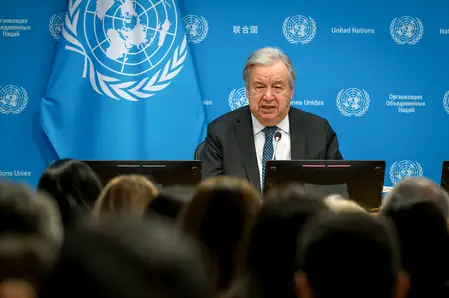
Global markets shuddered as oil prices jumped 5.63% on Monday, fueled by Gulf instability and fresh UN warnings of an impending Iran conflict’s devastating toll. Secretary-General Antonio Guterres, dialing regional heavyweights, spearheaded a diplomatic surge to pull the world back from the brink.
UN spokesperson Stephen Dujarric laid bare the stakes: unchecked military escalations could paralyze international trade, with energy prices exploding if the Strait of Hormuz closes. He spotlighted the disproportionate burden on developing nations, already strained by volatility.
Beyond immediate economic hits, Guterres frets over contagion effects drawing in bystander countries—think Jordan, Syria, Lebanon, and GCC partners. His marathon diplomacy targeted Qatar’s Emir Sheikh Tamim bin Hamad Al Thani, Oman’s Foreign Minister Sayyid Badr bin Hamad Albusaidi, and the bloc’s envoys.
Chats with the Emir zeroed in on de-escalating military posturing through renewed negotiations for lasting calm. Guterres commended Oman’s shuttle diplomacy between Iran and America, while denouncing US-Israel strikes on Iran and Iran’s ripostes against Gulf targets—timed just after Oman-brokered Iran-Israel talks in Geneva.
The UN’s plea rings clear: cease fire now, dial back the rhetoric, and embrace good-faith talks. As traders watch oil gauges nervously and leaders weigh responses, Guterres’ moves offer a lifeline, transforming dire forecasts into a blueprint for stability and shared prosperity.