
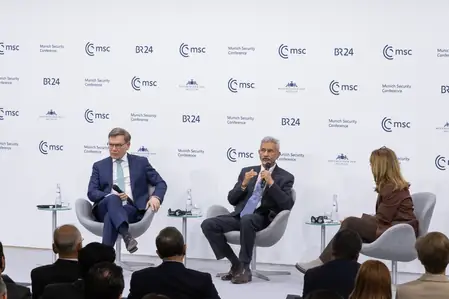
External Affairs Minister S. Jaishankar delivered a masterclass in diplomatic assertiveness at the Munich Security Conference, pushing back against US suggestions that India is curtailing Russian oil purchases. Labeling energy choices as pragmatic calculations, he reaffirmed New Delhi’s dedication to strategic autonomy amid swirling international claims.
The backdrop involves bold statements from US leaders. President Trump declared India would pivot away from Russian crude toward American supplies, while Secretary Marco Rubio cited commitments from bilateral talks to avoid extra imports post-new sanctions. These assertions followed an interim trade pact, but Jaishankar swiftly clarified no such curbs exist.
‘We are deeply committed to strategic autonomy—it’s part of our history and transcends political boundaries,’ Jaishankar stated. Delving into oil markets, he explained the complexity: companies worldwide, including India’s, weigh availability, cost, and risks for optimal decisions.
Faced with pointed questions on the trade deal’s implications, his response was candid: ‘Yes, I will make independent choices that may not match yours.’ This unyielding position neither confirms nor refutes US narratives officially, maintaining strategic ambiguity.
India’s energy playbook is battle-tested. As import dependence grows, securing affordable supplies from Russia has stabilized domestic prices and fueled economic momentum. Jaishankar’s address underscores a key truth: in a fragmented world, sovereignty in decision-making is non-negotiable.
The conference spotlighted shifting alliances, with Jaishankar’s poise reminding observers of India’s rising clout. By prioritizing self-reliance, New Delhi not only secures its energy future but also models balanced engagement in global affairs, free from undue influence.