
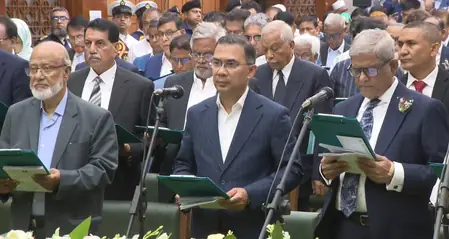
Tuesday’s oath ceremony at Bangladesh’s National Parliament South Plaza became a flashpoint in the nation’s evolving democracy. Freshly elected BNP MPs, riding high on their 13th parliament landslide, took oaths exclusively as lawmakers, bypassing the Constitution Reform Council designation—a direct rebuff to Chief Adviser Muhammad Yunus.
The absence of Speaker and Deputy Speaker necessitated Chief Election Commissioner AMM Nasir Uddin’s involvement, with Parliament Secretary Kaniz Mula facilitating proceedings. Tarique Rahman, BNP’s powerhouse leader from Dhaka-17, set the tone, supported by wife Zubaida and daughter Jaida in attendance.
Media reports from Prothom Alo and The Daily Star highlight BNP leader Salahuddin Ahmed’s disclosure: Tarique’s orders ensured no signatures on reform forms, rejecting unmandated roles. This defies the interim setup’s July 2025 reform roadmap, born from 2024’s upheaval against Sheikh Hasina, involving Yunus and dozens of parties.
Jamaat-e-Islami and NCP-led coalitions flirted with boycott but took oaths regardless. The elections on February 12, integrated with a National Charter vote in 299 areas, crowned BNP with 209 seats (alliance: 212), Jamaat 68 (alliance: 77), NCP 6, independents 7, Khilafat Majlish 3 total, and singles to Islamic Movement, Jatiya Party, Gonoadhikar Parishad, and Ganasanghati Andolan.
BNP’s calculated defiance amplifies its electoral dominance, promising a parliament poised for confrontations on constitutional sanctity and power distribution. Bangladesh’s political arena is set for transformation.