
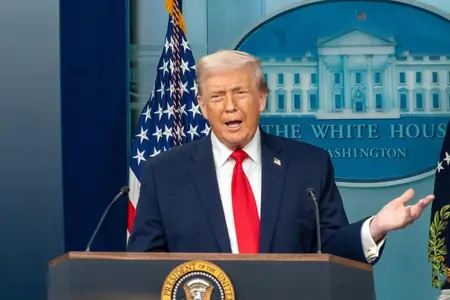
From the heart of the Oval Office, President Donald Trump unveiled plans for an unprecedented U.S. naval deployment toward Iran—one larger than the Venezuela operation—while insisting on diplomacy as the top priority, though all paths forward stay viable. The revelation came amid a lively exchange on foreign policy, defense, and economic matters.
Trump painted a picture of overwhelming maritime might aimed at compelling Iran toward compromise. ‘More ships than ever are heading that way,’ he said, hoping for a deal but prepared for alternatives. Confirming outreach to Iranian officials, he affirmed message delivery without specifying ultimatums.
The backdrop is a decade-plus of acrimony, rooted in sanctions battles, nuclear standoffs, and Middle East proxy wars. Previous naval surges have served dual purposes: signaling strength and buying time for talks. Trump highlighted U.S. naval supremacy, calling the fleet ‘the most powerful in the world,’ yet clamped down on details about schedules or tactics.
‘We’d love to solve it through negotiation,’ Trump remarked, ‘but if it doesn’t work out, we have other ways.’ This calculated ambiguity defines his Iran playbook, blending coercion with conciliation. Observers note the risks of escalation in a tinderbox region, where missteps could ignite broader conflict.
With the fleet mobilizing, global markets brace for volatility, and allies urge caution. Trump’s gamble tests whether pressure yields progress or pushes toward confrontation. As tensions simmer, the deployment stands as a stark reminder of America’s strategic toolkit—and its willingness to wield it.