
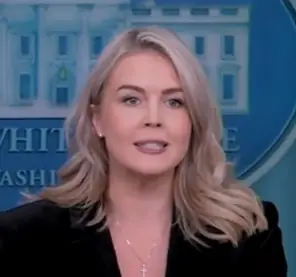
Washington’s February 6 briefing saw the White House categorically reject Cuban apprehensions over bilateral talks, with Press Secretary Caroline Leavitt defending President Trump’s diplomatic overtures and issuing a stern message to Havana. Leavitt suggested conversations are already happening, defying Cuba’s official denials.
Cuban leader Miguel Diaz-Canel had conditioned talks on no pressures or preconditions, insisting on equality and sovereignty respect—directly challenging Trump’s claim of active discussions. This set the stage for Leavitt’s unyielding response.
‘The Cuban government seems to be at its final stage, with the country on the verge of falling apart, so they need to exercise caution in their remarks about the US President,’ she cautioned. Reinforcing Trump’s position, Leavitt noted, ‘But as repeated, the President stays ready for diplomatic involvement.’ She affirmed belief in ongoing Cuban engagements without elaborating.
No specifics emerged on negotiation modalities or agendas, nor direct rebuttals to the no-conditions call, save for Trump’s general endorsement of diplomacy. The discussion was part of a wider national security overview.
US-Cuba relations remain a tapestry of antagonism and occasional rapprochement, punctuated by sanctions spanning decades and policy zigzags. Formal diplomatic restoration mid-2010s brought cautious progress, but persistent embargoes, Cuba’s economic crises, and political turbulence have dictated the pace of contacts—from migration pacts to restrained diplomatic exchanges.
By dismissing fears and spotlighting Cuba’s vulnerabilities, the White House aims to steer talks toward resolution. Trump’s preparedness offers hope, yet entrenched obstacles demand careful navigation for any lasting accord.