
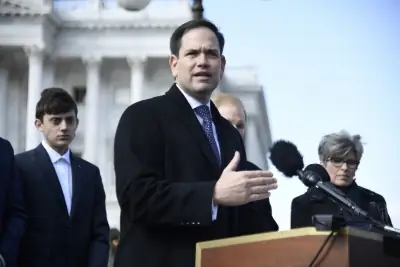
Budapest buzzed with diplomatic energy as US Secretary of State Marco Rubio, on day two of his Eastern Europe swing, formalized a civil-nuclear cooperation deal with Hungarian counterparts. The signing preceded a candid joint presser with Prime Minister Viktor Orban, where Rubio invoked Donald Trump’s legacy, recalling the 2023 one-year exemption from US sanctions on Russian energy for Hungary.
‘Personal ties between President Trump and Prime Minister Orban made it possible,’ Rubio declared. ‘Our goal: bolster your economy and ensure your success, aligning with our interests during your tenure.’ Hungary’s post-2022 commitment to Russian supplies had irked EU and NATO allies, but Rubio framed US policy as supportive and forward-looking.
Navigating tough questions on adversaries, Rubio rejected absolutism. For China, he stressed realism: ‘We don’t dictate separations; every nation grapples with its realities.’ Teasing Trump’s impending April trip to Beijing—a nation of immense scale and power—he insisted, ‘No talks means insanity. Disputes are there, but manageable through engagement.’ On Iran, he called it a challenging ‘fanatic religious regime’ but affirmed ongoing US efforts.
Orban praised the Trump years for 17 key investments, dubbing the partnership a ‘golden age.’ Rubio concurred, pledging American leadership in global order—from uniquely positioning for Russia-Ukraine mediation to persistent Iran diplomacy. This exchange not only advanced nuclear collaboration but reaffirmed a transatlantic bond rooted in mutual respect and strategic pragmatism, setting the tone for future dealings.