
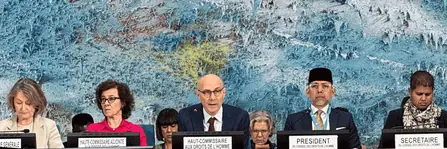
The UN Human Rights Council’s 61st session became a platform for High Commissioner Volker Turk to celebrate India’s democratic resilience while issuing stern warnings to Pakistan and China over systemic rights violations.
Fresh from his India visit tied to the AI Impact Summit, Turk spotlighted the nation’s civil society as a dynamic force. “Their contributions to preserving India’s democratic traditions and minority protections are exemplary and worthy of global emulation,” he declared. Free civic engagement, he stressed, remains the bedrock of healthy democracies.
In stark juxtaposition, Pakistan drew sharp criticism for jailing human rights lawyers for 17 years over social media activity. “Sentencing defenders merely for online expressions is unacceptable,” Turk asserted, signaling a dangerous intolerance for advocacy.
China’s use of opaque laws to suppress dissent prompted a direct plea from Turk: halt these practices and free the arbitrarily detained. He expressed profound regret over unaddressed atrocities against Uyghurs, other Muslims, and Tibetans in regions like Xinjiang.
Turk extended his concerns to Georgia’s civic restrictions and Venezuela’s detention abuses, where some prisoners have been freed but others languish. Advocating for emergency measure overhauls and inclusive public processes, he scheduled a March 16 briefing for deeper insights.
This address not only validates India’s pluralistic approach but also pressures violator states to reform. In an era of global democratic backsliding, Turk’s message reinforces the UN’s role in championing accountability and justice worldwide.