
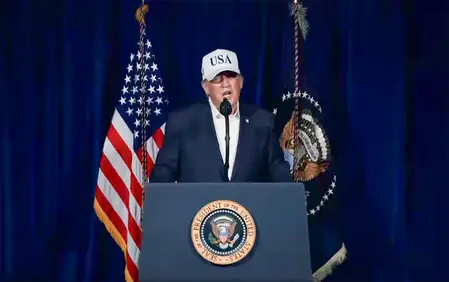
The US Senate’s dismissal of a War Powers Resolution on March 4 has kept President Trump’s Iran military campaign alive, sparking renewed scrutiny of a law meant to tether presidential war-making.
Passed in 1973 after Vietnam exposed executive overreach under Nixon, the act requires 48-hour notifications to Congress for troop deployments into combat zones. Without explicit authorization in 60 days (extendable to 90), operations must cease—a bid to restore congressional primacy in warfare decisions.
In practice, it’s more symbolic than binding. A bipartisan parade of presidents has complied minimally, recharacterizing wars as ‘police actions’ or ‘counterterrorism’ to evade deadlines. Reagan in Lebanon, Clinton in Haiti, Obama in Libya—all bent the rules.
Success stories are rare but real: Congressional resolutions pressured withdrawals from Lebanon in 1984 and Somalia in 1994. The bold 2019 move to defund Yemen aid sailed through Congress before Trump’s veto, proving the system’s potential when unified.
Today’s rejection ensures no brakes on Iran ops, yet the conversation endures. Lawmakers decry eroded checks; the White House champions swift executive action in volatile times. Amid Iran escalations, questions loom: Does the resolution need teeth, or is it obsolete?
Ultimately, it embodies America’s founders’ genius—a deliberate friction to guard liberty. As debates rage, the Senate vote reminds us: Power in Washington is never surrendered easily.