
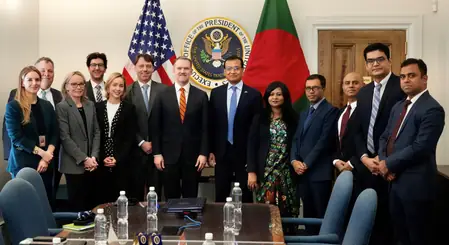
Breaking new ground in regional diplomacy, the United States has secured its debut bilateral trade agreement with a South Asian partner: Bangladesh. Unveiled in Washington, the comprehensive pact regulates tariffs, enhances market access, fortifies labor rights, and pioneers digital trade norms.
Jamison Greer, America’s top trade envoy, joined hands with Sheikh Bashir Uddin from Bangladesh in a formal signing. ‘President Trump’s leadership is driving trade strategies that yield tangible gains for U.S. labor and industry,’ Greer noted, framing the deal as a catalyst for open markets and export growth.
Bangladesh rolls out the red carpet for U.S. goods—think chemicals, machines, medical tech, energy, soy, dairy, meats, nuts, and produce—with favorable terms. Reciprocally, American tariffs on Bangladeshi imports stay below 19% in most cases. Barriers beyond duties will ease, with U.S. standards gaining official nod for vehicles, health devices, drugs, and farm safety.
Labor provisions demand adherence to international benchmarks, rigorous law enforcement, and import bans on coerced production. Export zones get labor upgrades, while digital trade merits its own section. Economic security weaves through the fabric, mandating joint efforts on controls, bans, and chain integrity, plus restrictions on risky tech acquisitions.
Bangladesh eyes bigger U.S. buys: wheat, soybeans, cotton, sustained LNG flows, planes, and defense hardware. Legal formalities cleared, the pact kicks in after 60 days; either side can bow out with notice. This milestone fortifies U.S. influence in South Asia, promising jobs, innovation, and stability amid global flux.