
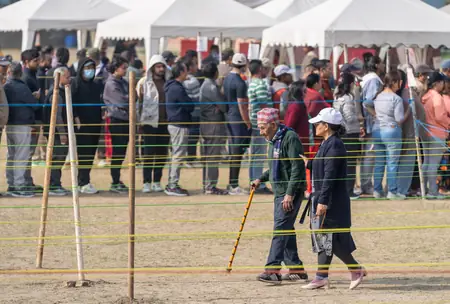
The curtains have fallen on Nepal’s 2026 House of Representatives elections, with vote counting poised to begin Thursday night. In a bold pledge, the Election Commission targets announcing 165 FPTP constituency results within 24 hours, crediting streamlined processes. Proportional representation tallies, however, face delays from remote mountain collections.
Polling spanned 77 districts via 23,000 stations from dawn to dusk, engaging nearly 19 million voters: a near-even split of genders plus a tiny ‘other’ category. Turnout hopes soar past 65%, buoyed by Acting CEC Ram Prasad Bhandari’s projections and media like Kathmandu Post.
Post the 2025 Gen-Z rebellion—77 dead, 84 billion rupees in losses—ex-PM Oli exited, and Sushila Karki’s interim setup announced polls to restore democracy. The 275 seats split 165 FPTP and 110 proportional, with candidates mostly middle-aged or senior.
Comparisons to prior polls highlight trends: 78.34% in 2013, down to 61.63% in 2022. Youth candidates number only 201, signaling a generational tilt. As scanners hum, Kathmandu pulses with anticipation. Outcomes could cement Karki’s legacy or usher bold shifts, influencing Nepal’s foreign ties and internal reforms. Stakeholders from India to China watch closely.