

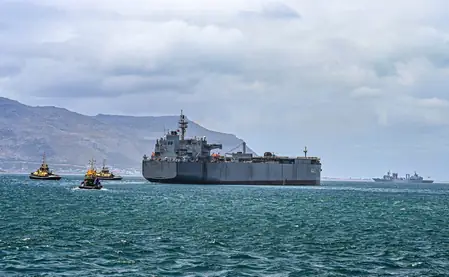
Tensions ripple across global waters as adversarial powers unite: Chinese, Russian, and Iranian warships have assembled at South Africa’s Simon’s Town for ‘Will for Peace 2026.’ This BRICS Plus naval drill, starting Saturday and led by China, aims to lock in maritime economic security while sending a unified message of stability.
Hosted by South Africa until January 16, the exercise expands the BRICS bloc—originally Brazil, Russia, India, China, South Africa—to include Egypt, Indonesia, Saudi Arabia, Ethiopia, and UAE. It’s positioned as a counterweight to U.S.-led Western influence.
President Trump’s fiery accusations of BRICS ‘anti-Americanism’ and tariff warnings have escalated strains with participants. Still, South African spokesperson Lt. Col. Mpho Mathebula told Reuters it’s apolitical: ‘No enmity here—just enhancing our navies’ joint operations.’ Past U.S. drills were cited to underline balance.
Opening events saw Brazil, Egypt, and Ethiopia as observers. South Africa’s forces described it as uniting fleets for safety protocols and interoperability.
Vessels stealing the spotlight: China’s CNS Tangshan (122), CNS Taihu (889), Iran’s Iris Makran (441), and SAS Amatola (F145). Defense Force imagery captured their strategic docking.
Opposition voices in Ramaphosa’s alliance slam it as forsaking neutrality, casting South Africa as BRICS’s frontliner. Mathebula rejected the narrative, prioritizing skill-sharing.
In an era of contested seas, these drills underscore BRICS Plus’s maritime ambitions. With economic stakes soaring, this show of force challenges unipolar dominance, potentially reshaping alliances as Trump’s policies intensify rivalries.