
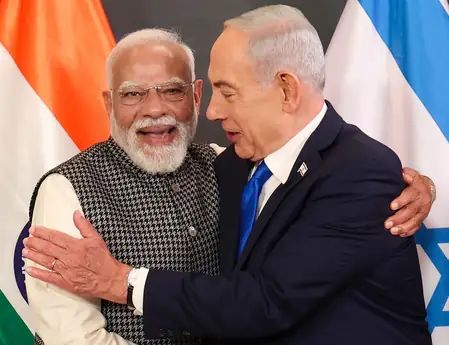
A powerhouse duo is reshaping South Asia’s security landscape, and Pakistan isn’t taking it lightly. PM Modi’s Israel sojourn, marked by the nation’s highest honor, supercharged bilateral ties amid new MoUs for co-building weapon systems like an India-specific Iron Dome.
Enter Netanyahu’s Hexagon Alliance pitch—a regional bloc excluding rivals—that prompted Pakistan’s Senate to fire back with a scathing resolution. It paints the partnership as a divisive scheme isolating Islamic states, echoed loudly in media frenzies where pundits warn of encirclement alongside China.
Historical precedents fuel the fire. Kargil’s high-altitude battles saw Israeli-enhanced Mirages unleash devastation on infiltrators. Balakot’s precision raids relied on Israeli smart bombs and drones, proving the alliance’s battlefield mettle.
Generations of Heron and Searcher UAVs have kept vigil over threats. This proven synergy, now formalized in arms co-development, has Pakistan on edge, interpreting the Senate’s move as a barometer of dread.
Critics in Delhi call out Islamabad’s duplicity: slamming defensive pacts while cheering terror outfits. India’s alliances with Israel and Russia prioritize stability, not conquest, unlike Pakistan’s weaponized diplomacy.
The Modi-Netanyahu chemistry adds glue to this enduring friendship, first elevated in 2017. With West Asia in flux, Pakistan’s jitters stem from Israel’s ascent as New Delhi’s premier arms partner. Firmly, India positions these bonds as security imperatives, beneficial to all without malice.