
South Korea’s judiciary delivered a life sentence to ex-President Yoon Suk Yeol on February 19 for rebellion tied to his aborted martial law push, dodging the death penalty and unleashing a storm of political recriminations. Why the restraint? A moratorium on executions since 1997 looms large, fueling accusations of judicial timidity.
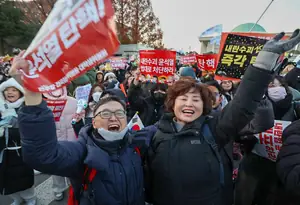
Courtroom drama spilled onto Seoul’s pavement as jubilant anti-Yoon crowds soured into rage upon hearing ‘life imprisonment’ rather than capital punishment. Local media, citing politicians and NGOs, decried the outcome as insufficient for a leader who allegedly weaponized the army against democracy.
Key voices amplified the discontent. Democratic Party heavyweight Jung Chung-rae deemed it a capitulation to forces that defied public uprising against Yoon’s December gambit. Civic groups, labor fronts, and human rights bodies rallied, protesting what they call an erosion of democratic norms via authoritarian tactics.
Context matters: Yoon faced charges of power abuse mirroring dark chapters like Chun Doo-hwan’s coup era, where even death sentences morphed into pardons. Legal texts prescribe death, hard-labor life, or standard life for ringleaders—Yoon got the parole-eligible variant after 20 years.
Advocates for execution insist it alone quells future tyrants, stripping any redemption path. Opponents counter that modern justice favors rehabilitation over revenge, especially sans active gallows since late 20th century. Lawyers in closing arguments recast death as societal symbolism, not guillotine.
Society splits starkly: retribution seekers versus rule-of-law champions. This fault line exposes Korea’s enduring political chasm, where verdicts aren’t endpoints but kindling for rallies. Yoon’s punishment tests the balance between accountability and mercy in Asia’s vibrant democracy.